
Stem Cells: How have They Evolved and Where Are They Heading?
This is a research paper written by Haniya Malik. Click the button below to learn more about her. There are other research papers written by her too. Feel free to check out the blog! It is worthy to note that this was submitted for the Silver CREST Award.
Click Here
Abstract
This research paper examines the implications of stem cells in the medical field, offering scientific, legal, political and ethical perspectives. It explains how stem cells work, including how they can differentiate into various cell types and their applications in regenerative medicine, particularly in treating conditions like leukaemia. The paper also explores the challenges and limitations of stem cell therapy, such as the risk of tumour formation and immune rejection, alongside the ethical concerns surrounding embryonic stem cell research. Ultimately, it highlights both the transformative potential of stem cells and the need for careful regulation to ensure their safe and effective use.
Introduction
A large multicellular structure like the body is composed of many cells, which can broadly be categorised into three types: somatic cells, which make up most of the body; germ cells, which are involved in reproduction and can give rise to sperm and egg cells; and stem cells. Stem cells are unspecialised cells that have the ability to develop into different cell types. They are unique in their ability to self-renew and differentiate, making them essential for growth, repair, and regeneration in the body. Stem cells can be found in various tissues, including bone marrow, skin, and the brain, and they play a crucial role in maintaining tissue homeostasis and healing injuries.
Stem cells are defined as undifferentiated cells that have the capacity to self-renew and differentiate into specialised cell types. Unlike most cells in the body, which are committed to a specific function, stem cells can divide to produce more stem cells or develop into various cell types, depending on the signals they receive from their environment. This ability makes them vital for growth, tissue repair, and regeneration throughout life.
With regards to the different types of stem cells, there are embryonic stem cells, which are derived from early-stage embryos and are pluripotent, meaning they can differentiate into almost any cell type in the body. Adult stem cells, also known as somatic or tissue-specific stem cells, are found in various tissues throughout the body and can differentiate into specific cell types related to the tissue they reside in. Induced pluripotent stem cells (iPSCs) are adult cells that have been reprogrammed to revert to a pluripotent state, allowing them to differentiate into various cell types. Lastly, there are perinatal stem cells, which are found in the umbilical cord and placenta, and can differentiate into various cell types, similar to embryonic stem cells but with fewer ethical concerns.
Discussion
Stem cells are capable of self-renewal, meaning they can divide and produce more stem cells, maintaining a population of undifferentiated cells. They can also differentiate into specialised cell types, such as nerve cells, muscle cells, and blood cells, depending on the signals they receive from their environment. This differentiation process is tightly regulated and can be influenced by various factors, including growth factors, cytokines, and the extracellular matrix.
When a stem cell divides, it can undergo either symmetric or asymmetric division. In symmetric division, both daughter cells become stem cells, increasing the stem cell population. In asymmetric division, one daughter cell remains a stem cell while the other differentiates into a specialised cell type. This balance between self-renewal and differentiation is crucial for maintaining tissue homeostasis and ensuring proper development and repair.
Cell differentiation
Cell differentiation is the process by which stem cells develop into specialised cell types with specific functions. This process involves changes in gene expression, where certain genes are activated or silenced, leading to the production of proteins that determine the cell’s function and characteristics. Differentiation can be influenced by internal factors, such as transcription factors and epigenetic modifications, as well as external factors, including signalling molecules and the cellular microenvironment.
Cell fusion
Cell fusion is a process where two or more cells merge to form a single hybrid cell. In the context of stem cells, cell fusion can occur between a stem cell and a differentiated cell, resulting in a hybrid cell that may exhibit properties of both. This phenomenon has been observed in various tissues and can contribute to tissue repair and regeneration. However, cell fusion is relatively rare and its significance in stem cell biology is still being explored.
Reprogramming
Reprogramming refers to a process where stem cells can be reverted back to a less specialised state, essentially reversing their differentiation. This can be achieved through various methods, including the introduction of specific transcription factors or the use of small molecules that alter gene expression. Reprogramming has led to the development of induced pluripotent stem cells (iPSCs), which are adult cells that have been reprogrammed to a pluripotent state, allowing them to differentiate into various cell types.
Plasticity
Plasticity refers to the ability of stem cells to change their differentiation potential and adopt different cell fates. This flexibility allows stem cells to respond to various signals and adapt to different environments. Plasticity can be categorised into different types based on the range of cell types a stem cell can differentiate into:
Totipotent — fertilised egg [zygote]
Pluripotent — Embryonic Stem Cells
Multipotent — Hematopoietic Stem Cells
Oligopotent — Lymphoid Stem Cells
Unipotent — Muscle Stem Cells
Differentiation-based therapies
Differentiation-based therapies involve the use of stem cells that are capable of differentiating into specific cell types to replace damaged or lost cells in the body. These therapies aim to restore function to tissues and organs affected by disease or injury. For example, haematopoietic stem cell transplantation is used to treat leukaemia and other blood disorders by replacing diseased bone marrow with healthy stem cells that can produce new blood cells.
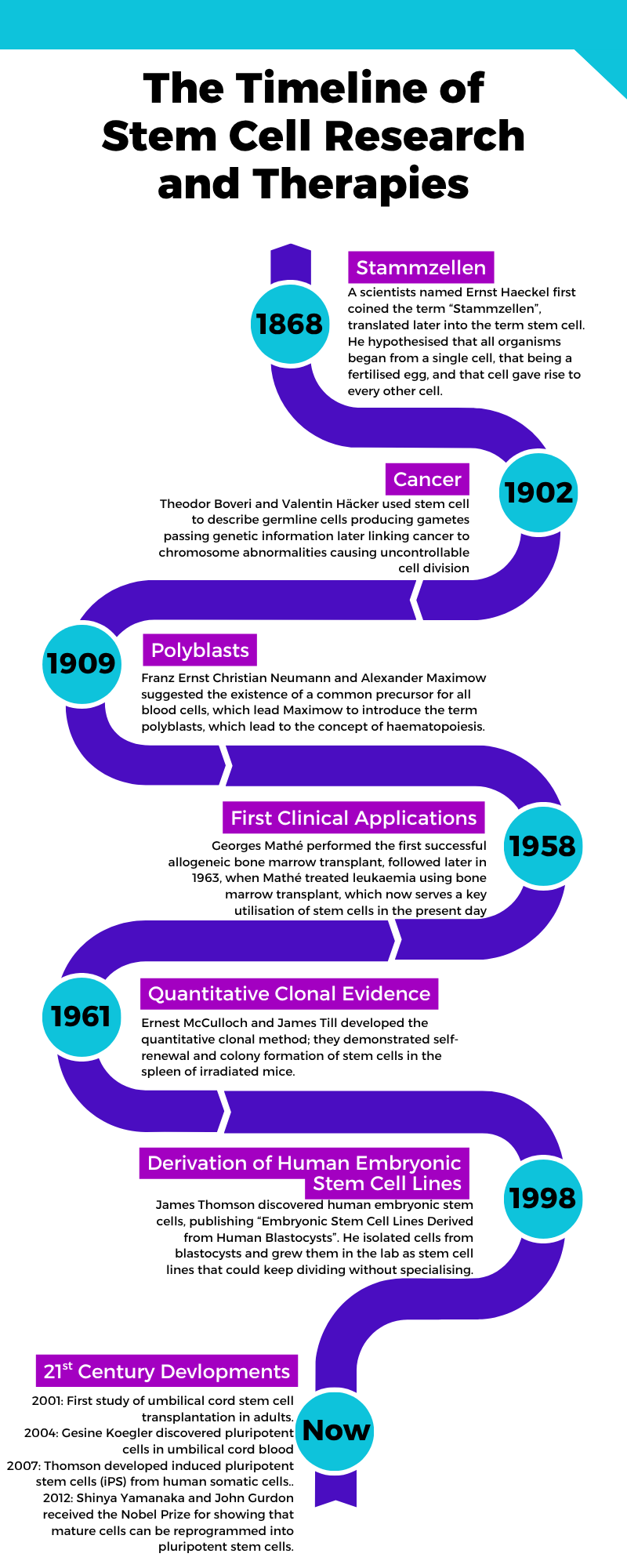
The timeline of stem cell research and therapies
An important aspect of stem cell research is investigating the timeline of how stem cells were first discovered, how they have evolved, and the potential for their use in the future. The timeline of stem cell research began in the early 20th century, with the discovery of stem cells in bone marrow. In the 1960s, researchers identified haematopoietic stem cells, which are responsible for producing blood cells. The 1980s saw the first successful bone marrow transplant using stem cells to treat leukaemia. In 1998, embryonic stem cells were first isolated from human embryos, leading to significant advancements in regenerative medicine. The discovery of induced pluripotent stem cells (iPSCs) in 2006 revolutionised the field by allowing adult cells to be reprogrammed into pluripotent stem cells. Since then, stem cell research has continued to advance, with ongoing clinical trials exploring the use of stem cells in treating various conditions, including Parkinson’s disease, diabetes, and spinal cord injuries. The future of stem cell research holds promise for developing new therapies and treatments, but it also raises ethical and regulatory challenges that need to be addressed.
Present applications
Stem cells are currently used in various medical applications, including:
Mesenchymal Stem Cells
These stem cells can differentiate into bone, cartilage, and fat cells, and are used in regenerative medicine to treat conditions like osteoarthritis and bone fractures.
Neural Stem Cells
Found in the brain, neural stem cells can differentiate into neurons, astrocytes, and oligodendrocytes. They are being researched for their potential in treating neurodegenerative diseases like Parkinson’s and Alzheimer’s.
Haematopoietic Stem Cells
These stem cells are found in bone marrow and can differentiate into all types of blood cells. They are widely used in bone marrow transplants to treat leukaemia and other blood disorders.
Skin Stem Cells
Located in the skin, these stem cells can differentiate into various skin cell types and are used in skin grafts and wound healing.
Intestinal Stem Cells
Found in the intestines, intestinal stem cells can differentiate into various intestinal cell types and are important for maintaining the lining of the gut.
Muscle satellite cells
These stem cells are found in skeletal muscle and can differentiate into muscle cells, playing a crucial role in muscle repair and regeneration.
Liver progenitor cells
These cells can differentiate into hepatocytes (liver cells) and bile duct cells, and are being researched for their potential in treating liver diseases.
Endothelial progenitor cells
These stem cells can differentiate into endothelial cells, which line blood vessels, and are being researched for their potential in treating cardiovascular diseases.
Reprogramming
One of the most significant advancements in stem cell research is the development of induced pluripotent stem cells (iPSCs). In 2006, Shinya Yamanaka and Kazutoshi Takahashi discovered a method to reprogram adult cells into iPSCs by introducing four specific genes: Oct-3/4, Sox2, KLF4, and c-Myc. This breakthrough allowed researchers to generate pluripotent stem cells from adult cells, avoiding the ethical concerns associated with embryonic stem cells. iPSCs have since been used in various research applications, including disease modelling, drug testing, and potential cell therapies.
Drug testing
Stem cells, particularly iPSCs, can be used for drug testing and development. By differentiating stem cells into specific cell types, researchers can create models of diseases and test how potential drugs affect those cells. This approach can provide valuable insights into drug efficacy and safety, potentially reducing the need for animal testing.
Repair and replacement of damaged tissues
Stem cells have the potential to repair and replace damaged tissues in the body. For example, mesenchymal stem cells can differentiate into bone, cartilage, and muscle cells, making them useful in treating conditions like osteoarthritis and bone fractures. Umbilical cord blood stem cells are also used in therapies for various diseases, including leukaemia and other blood disorders. Additionally, stem cells are being researched for their potential in treating conditions like arthroplasty and osteonecrosis, where they can help regenerate damaged tissues and improve patient outcomes.
Organ production
Stem cells hold promise for organ production and transplantation. Researchers are exploring the use of stem cells to grow organs in the laboratory, which could address the shortage of donor organs for transplantation. By differentiating stem cells into specific cell types and using tissue engineering techniques, scientists aim to create functional organs that can be transplanted into patients.
Haematopoietic transplantation
Haematopoietic transplantation is a process where haematopoietic stem cells are transplanted into a patient to restore blood cell production, commonly used to treat leukaemia and other blood disorders.
Limitations
While stem cells hold great promise for medical treatments, there are several limitations and challenges associated with their use. These include:
Tumour Formation
One of the significant risks associated with stem cell therapies is the potential for tumour formation. Pluripotent stem cells, such as embryonic stem cells and iPSCs, have the ability to divide indefinitely and differentiate into various cell types. However, if not properly controlled, these cells can form tumours known as teratomas. Teratomas are masses that can contain different types of tissues, such as hair, muscle, and bone. The risk of tumour formation is a major concern in stem cell research and therapy, and researchers are working to develop methods to minimise this risk.
In-vitro manipulation and Transfer of Infection
In-vitro manipulation of stem cells involves growing and modifying stem cells in a laboratory setting. This process can introduce risks, including the potential for genetic mutations and the transfer of infections. Contamination during cell culture can lead to the growth of unwanted cells or pathogens, which can compromise the safety and efficacy of stem cell therapies. Ensuring sterile conditions and rigorous testing is essential to minimise these risks.
Biological contamination
Biological contamination refers to the presence of unwanted microorganisms, such as bacteria, viruses, or fungi, in stem cell cultures. This contamination can arise from various sources, including the laboratory environment, reagents, or human error. Biological contamination can affect the growth and differentiation of stem cells, leading to unreliable results and potential safety risks in therapies.
Cross-contamination
Cross-contamination occurs when stem cells from one culture are inadvertently mixed with stem cells from another culture. This can happen due to improper handling, labelling errors, or the use of shared equipment without proper sterilisation. Cross-contamination can lead to the mixing of different cell lines, which can compromise the integrity of research and therapies.
Chemical contamination
Chemical contamination involves the presence of unwanted chemicals in stem cell cultures, which can affect cell growth and differentiation. This contamination can arise from reagents, media, or other substances used in the laboratory. Chemical contamination can lead to changes in cell behaviour, reduced viability, and unreliable experimental results.
Immune-related Risks
Stem cell therapies can also pose immune-related risks. When stem cells are transplanted into a patient, the recipient’s immune system may recognise the cells as foreign and mount an immune response against them. This can lead to the rejection of the transplanted cells and limit the effectiveness of the therapy. Researchers are exploring methods to minimise immune rejection, such as using stem cells derived from the patient themselves (autologous stem cells) or developing immunosuppressive therapies.
Long-term safety
Long-term safety is a crucial consideration in stem cell therapies. The potential for stem cells to form tumours or undergo unwanted differentiation over time raises concerns about their safety in clinical applications. Long-term studies are needed to assess the safety and efficacy of stem cell therapies and to monitor for any adverse effects that may arise years after treatment.
Cell administration
Cell administration refers to the process of delivering stem cells into a patient’s body for therapeutic purposes. This can be done through various methods, including intravenous injection, direct injection into tissues, or implantation. The method of administration can affect the distribution and effectiveness of the stem cells. Ensuring proper cell administration techniques is essential to maximise the therapeutic benefits and minimise risks.
Political Regulations
The use of stem cells, particularly embryonic stem cells, has raised significant political and ethical debates. Different countries have varying regulations regarding stem cell research and therapy. In the UK, the use of embryonic stem cells is regulated under the Human Fertilisation and Embryology Act, which allows research on embryos up to 14 days after fertilisation, provided certain conditions are met. The Warnock Report in 1984 recommended this 14-day rule, which has since been adopted in many countries. In Australia, the use of stem cells is regulated by the National Health and Medical Research Council (NHMRC), and there are strict guidelines governing their use in research and therapy. The country has seen a rise in stem cell clinics, with over 40 clinics offering stem cell therapies, some of which may not be adequately regulated.
UK
In the UK, stem cell research is regulated by the Human Fertilisation and Embryology Authority (HFEA), which oversees the use of embryos in research. The 14-day rule, established by the Warnock Report in 1984, limits research on human embryos to 14 days after fertilisation. This regulation aims to balance scientific advancement with ethical considerations.
Australia
Australia has a growing number of stem cell clinics, with over 40 clinics offering various stem cell therapies. However, the regulation of these clinics varies, and some may not adhere to strict guidelines. The National Health and Medical Research Council (NHMRC) provides guidelines for stem cell research and therapy, emphasising the importance of ethical considerations and patient safety.
Germany
Germany has strict regulations regarding stem cell research, particularly concerning embryonic stem cells. The German Embryo Protection Act prohibits the destruction of embryos for research purposes. However, Germany allows research on adult stem cells and induced pluripotent stem cells (iPSCs), which do not involve the destruction of embryos.
Italy
Italy has also implemented regulations on stem cell research, with a focus on ethical considerations. The country has seen the use of stem cells in therapies, such as the controversial “stamina therapy,” which involved the use of mesenchymal stem cells for treating various conditions. However, the therapy faced scrutiny due to lack of scientific evidence and regulatory oversight.
STAP
The STAP (Stimulus-Triggered Acquisition of Pluripotency) cell controversy involved claims of a new method to create pluripotent stem cells through stress stimuli. However, the research was later retracted due to allegations of data fabrication and misconduct. This incident highlighted the importance of rigorous scientific standards and ethical considerations in stem cell research.
iPSCs
Induced pluripotent stem cells (iPSCs) have emerged as a significant advancement in stem cell research, offering a way to generate pluripotent stem cells without the ethical concerns associated with embryonic stem cells. iPSCs are created by reprogramming adult cells, such as skin cells, into a pluripotent state. This technology holds promise for regenerative medicine, disease modelling, and drug discovery.
Conclusion
Ultimately, stem cell biology is rich in history, depth, political analysis, and ethical controversy. The entire dissertation accentuates how stem cells have evolved drastically from their discovery in the 19th century, and, while stem cell research in the modern era presents a promising future potential for these cells, it also underscores the many obstacles and difficulties that must be overcome in order to ensure the safety of individuals, predominantly patients, who utilise therapies based on these cells to cure life-threatening diseases, mitigating risk as much as possible. Furthermore, with the evolution of such cells from idealised “miracle cures” to applicable therapies and medicinal treatments, comes a great ethical weight of discovery, as stem cells introduce the ability to regenerate tissues and potentially rewrite the course and instigation of disease, placing unprecedented responsibility on those who employ these precursor cells. Once developed, the question would no longer be of whether to use them and what we can do with them, but what we should do with them to prevent the blurring of boundaries between the natural and artificiality of human life, as well as the thin line between acceptable and intolerable. This notion demonstrates how stem cell advancement is inseparable from ethical consideration, though, with stem cells being at the frontier of science, it may be that these thoughts gradually disappear along with any opposition as stem cells eventually develop into the revolutionary therapies first imagined.
References
- History and perspective of stem cell research – ScienceDirect
- Stem Cells: A Historical Review about Biological, Religious, and Ethical Issues – PMC
- Stem cells: past, present, and future | Stem Cell Research & Therapy
- Types-of-Stem-Cells-in-Regenerative-Medicine-A-Review.pdf
- The limited application of stem cells in medicine: a review | Stem Cell Research & Therapy
- Risk factors in the development of stem cell therapy | Journal of Translational Medicine