You’re a walking miracle, and not in the spiritual sense, or so Bill Bryson claims in his opening chapter ‘How to Build a Human’, with statistics and witty humour to back it all up. After all, who could have ever thought that in order to make you … you, it would take a grand sum of $151,578.46? And that’s not even taking into account labour and sales tax.
Of course, no one would be able to ‘build a human’, not even with all the thirty pounds of carbon, and other elements, not even if you were to call all of the brainiest scientists in modern day. But this is what Bill Bryson says is ‘the miracle of life’: not that the elements composing you are inherently special, but rather the way in which they come together in various ways to form the bare minimum of what it takes to be human.
Bryson isn’t just some biologist spouting facts — through his work, he prompts his reader to think and explore, and, arguably the most important, he inspires us to appreciate the seven octillion mindless particles in our body that work hard to keep us alive. This first chapter of his isn’t some trivia, nor is it a technical manual. No, it’s a deep dive into human anatomy from the perspective of someone who constantly asks smart questions, questions that we may never discover the answers to. But that’s the body for you.
One of the most fascinating things I came across in this chapter was the idea that a whopping 99.9% of our DNA is the same as any other human. And yet no two humans are alike in both appearance and personality. Scientists still don’t understand most of what composes the DNA, let alone what it actually does. For example, while scientists know that 2% of DNA codes for proteins, the other 98% is just a mystery to us. Take the Alu element. Bryson states that this is repeated a million times throughout our genome, constituting 10% of it all, yet to scientists, it is just mere gibberish. Just another enigma of the human body.
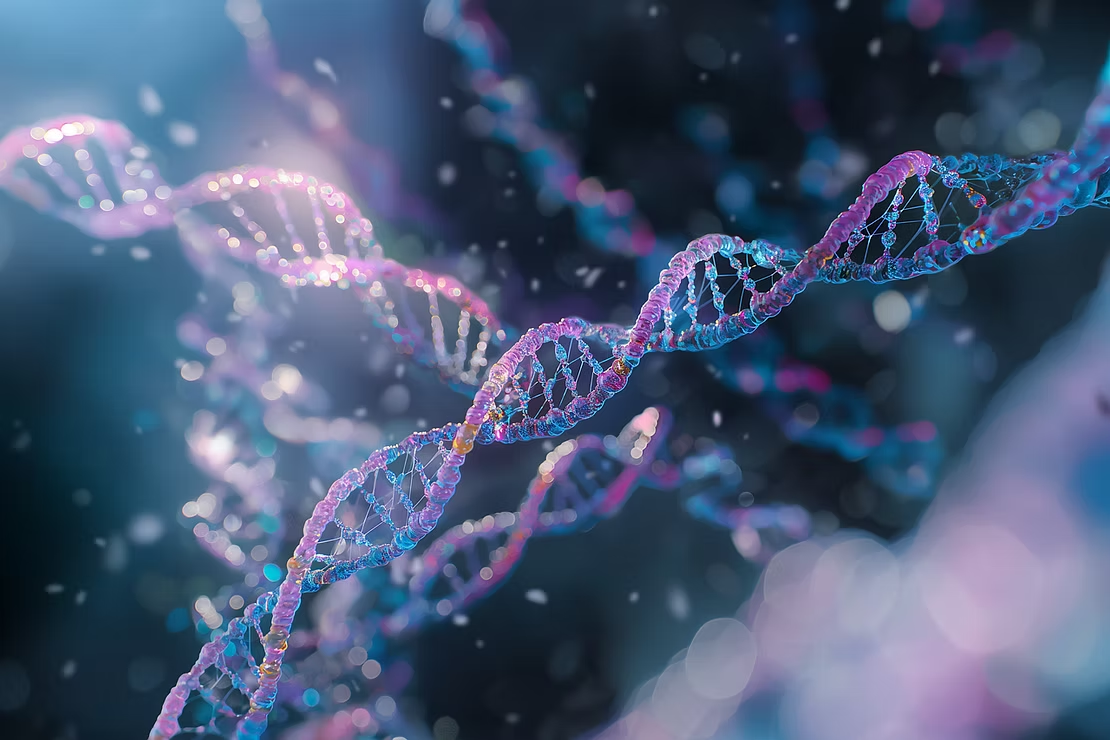
An image of a DNA helix The things our body does for us though … It preserves us, protecting us, even from the illnesses as fearsome as cancer, which Bryson says we develop a couple dozen times a week, only for our immune system to destroy the rouge, cancerous cells before we even notice. Yet, here we are wasting away on couches, stuck in an everlasting loop of TikTok scrolling, munching away on our fried foods like there’s no tomorrow. If there’s one thing this chapter has taught me, it’s to treat your body more than the mechanical machine many think it is, but rather like your most prized possession. Because it is, even if it isn’t perfect. As Bill Bryson beautifully puts: The miracle of human life is not that we are endowed with some frailties but that we aren’t swamped with them. What’s striking is the prose Bryson utilises to convey all of this. Yes, it’s inviting and witty, sprinkled with a tiny pinch of irony, but the beauty lies in his ability to simply observe and reflect, rather dispensing facts with no thought behind them, like a lesser writer might do. And the way he incorporates philosophy so seamlessly? In my opinion, it makes his writing all the more effective. Bryson emphasises that to build a human is to build a paradox, except this paradox toes the line between some ‘warm wobble of flesh’, and a walking phenomenon. As Bryson has said time and time again, we were once unicellular organisms wafting in shallow waters, and now, through the wonderous process of evolution, we are beings with complex organ systems, thoughts and emotions, albeit most of us do experience the occasional back ache and cramps. And the best part? It was just some wild, glorious accident, one Fate decided to conjure. If this was the first chapter, I can’t wait to read the rest of this amazing book. Highly recommend!